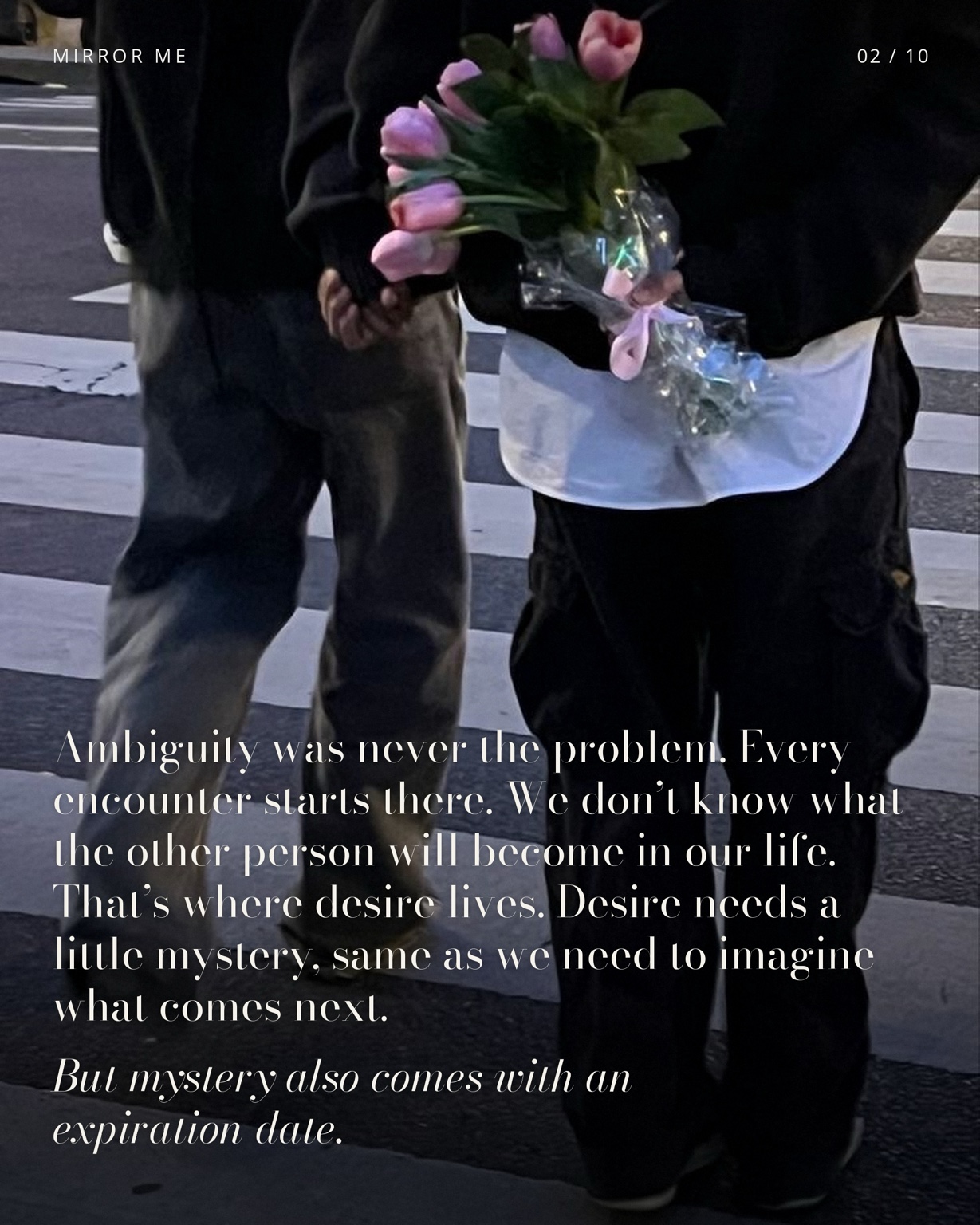
Ambiguity was never the problem. Every encounter starts there. We don’t know what the other person will become in our life. That’s where desire lives. Desire needs a little mystery, same as we need to imagine what comes next.
But mystery also comes with an expiration date.
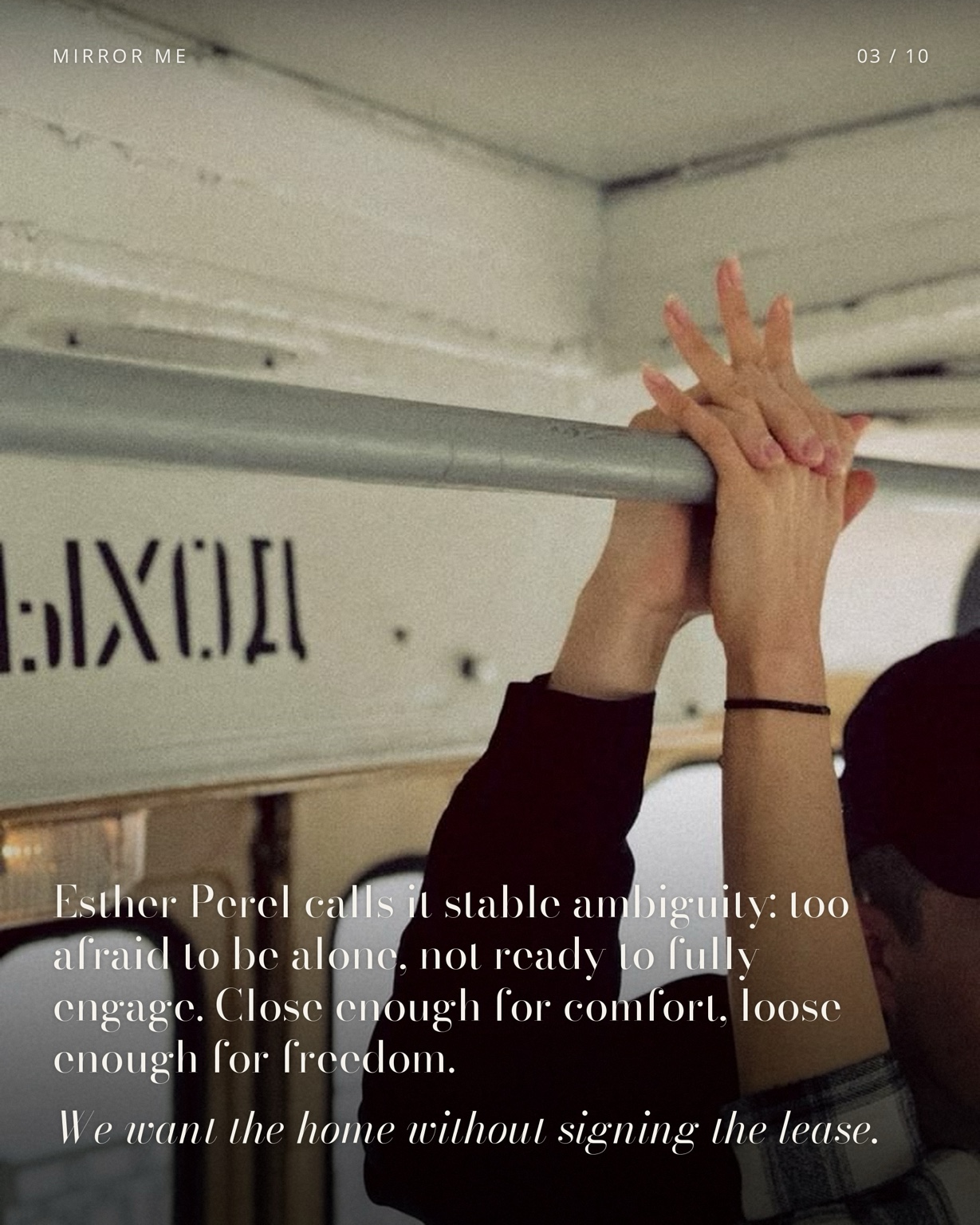
Esther Perel calls it stable ambiguity: too afraid to be alone, not ready to fully engage. Close enough for comfort, loose enough for freedom.
We want the home without signing the lease.
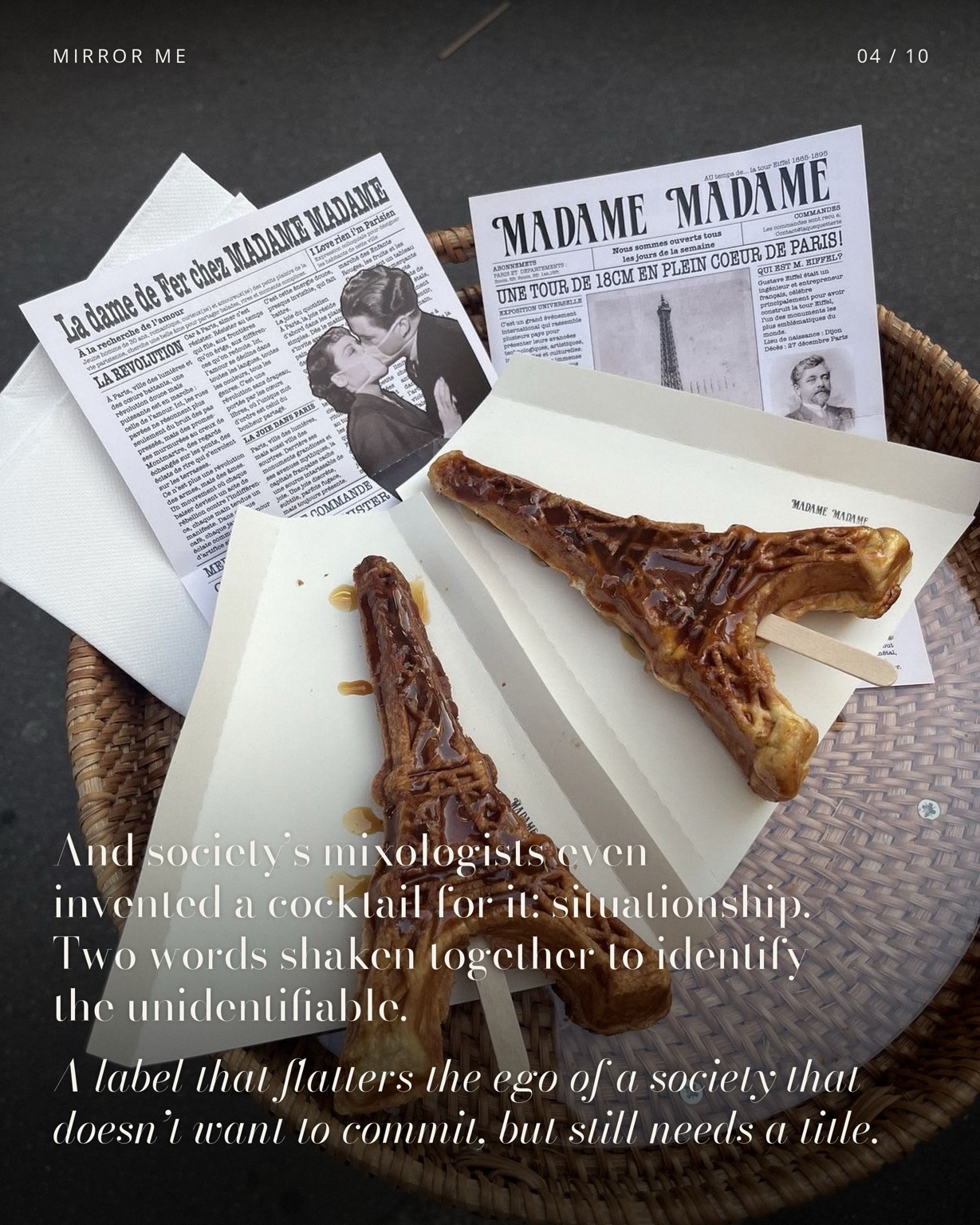
And society’s mixologists even invented a cocktail for it: situationship. Two words shaken together to identify the unidentifiable.
A label that flatters the ego of a society that doesn’t want to commit, but still needs a title.
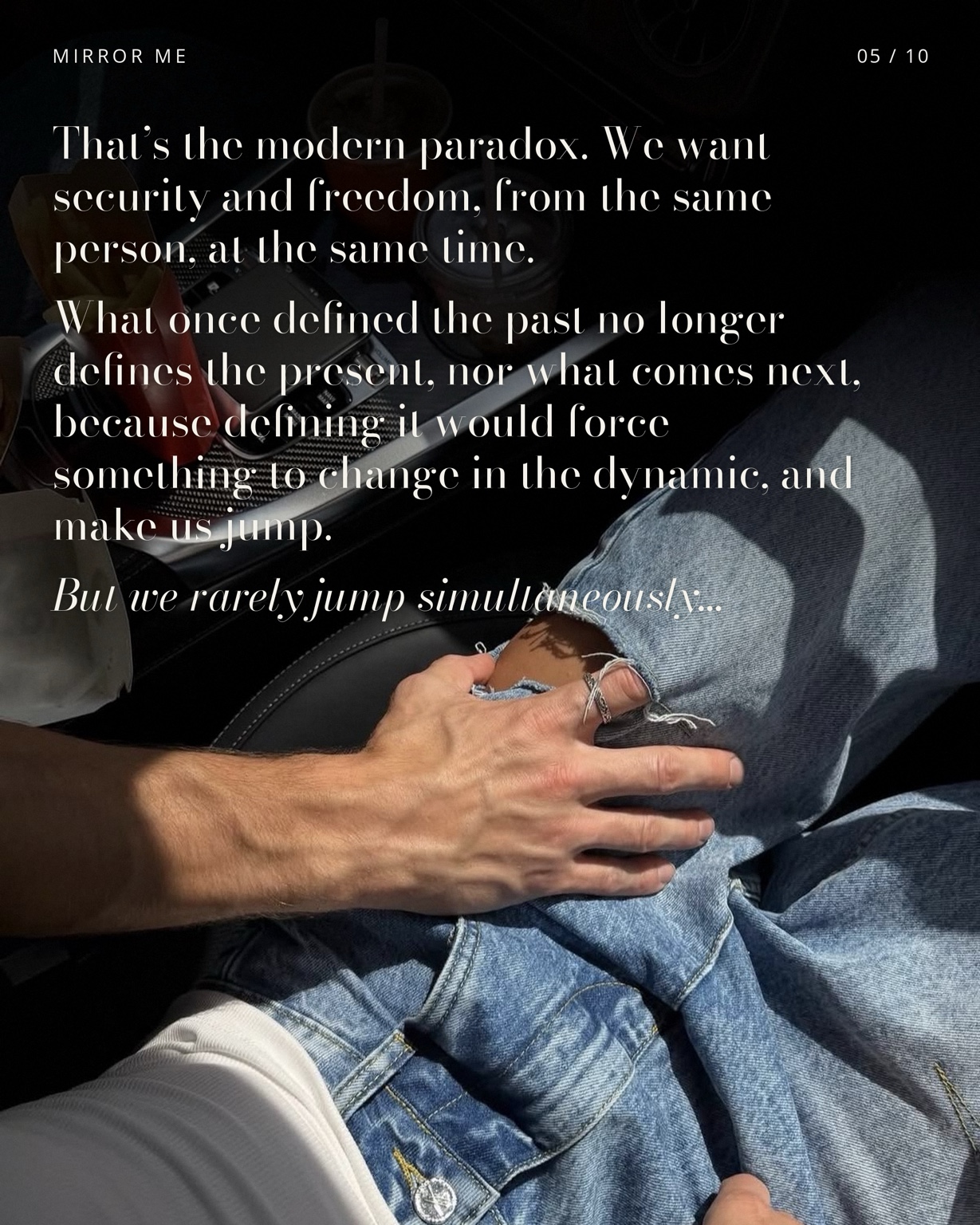
That’s the modern paradox. We want security and freedom, from the same person, at the same time.
What once defined the past no longer defines the present, nor what comes next, because defining it would force something to change in the dynamic, and make us jump.
But we rarely jump simultaneously...
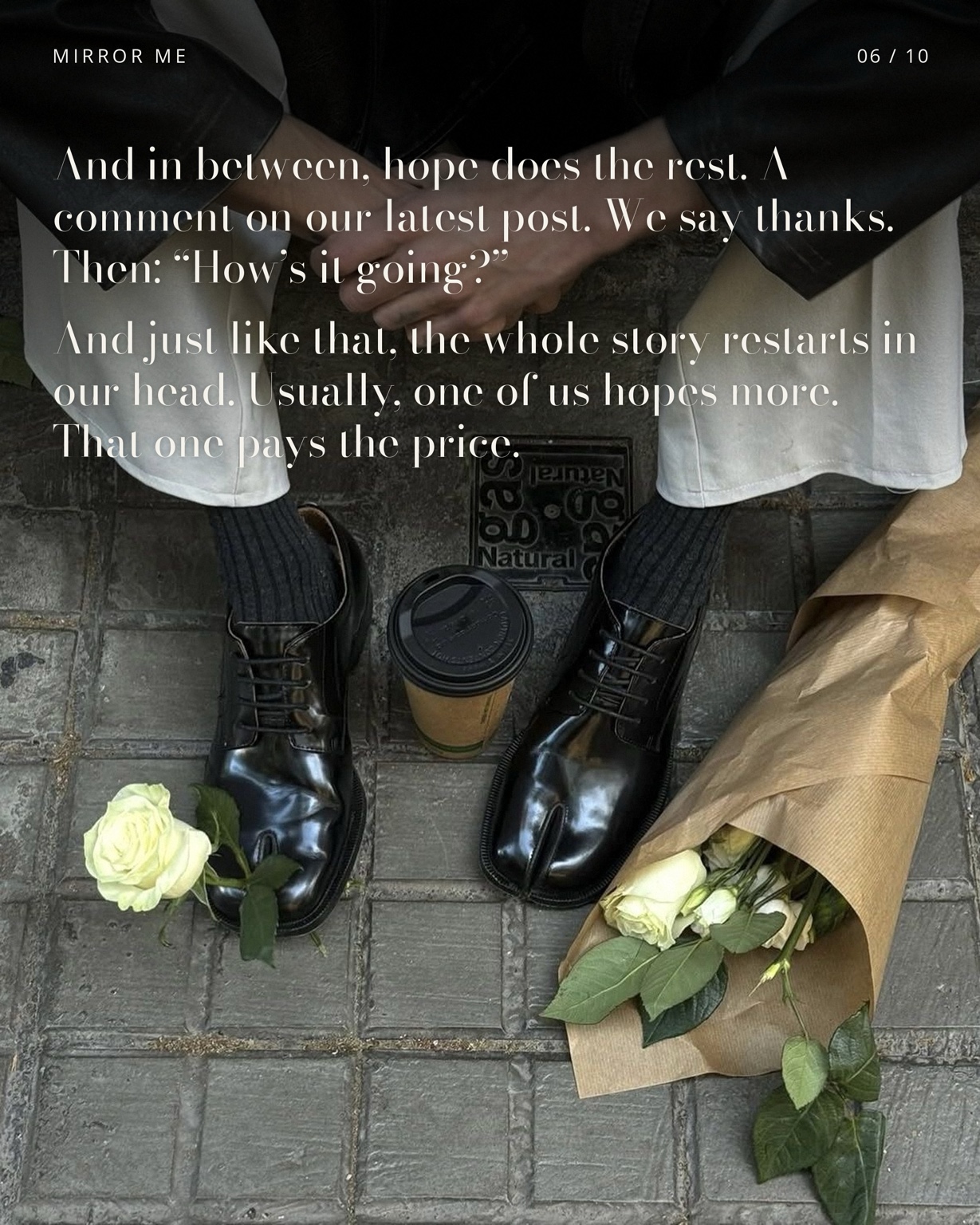
And in between, hope does the rest. A comment on our latest post. We say thanks. Then: “How’s it going?”
And just like that, the whole story restarts in our head. Usually, one of us hopes more. That one pays the price.
But the other person has their own world, and probably several. A culture, a family, a way of learning what can be said and what can’t. Even in the same city, we’re not on the same timeline.
That’s where alterity is, and where the friction happens.
So we fill the gaps with ourselves. We compare everything against our database. And they do the same with us.
We end up dating a projection.
And very quickly, we freeze, and go from author to spectator of our own story.
Between reality and fiction, what happens?
Sometimes, nothing.
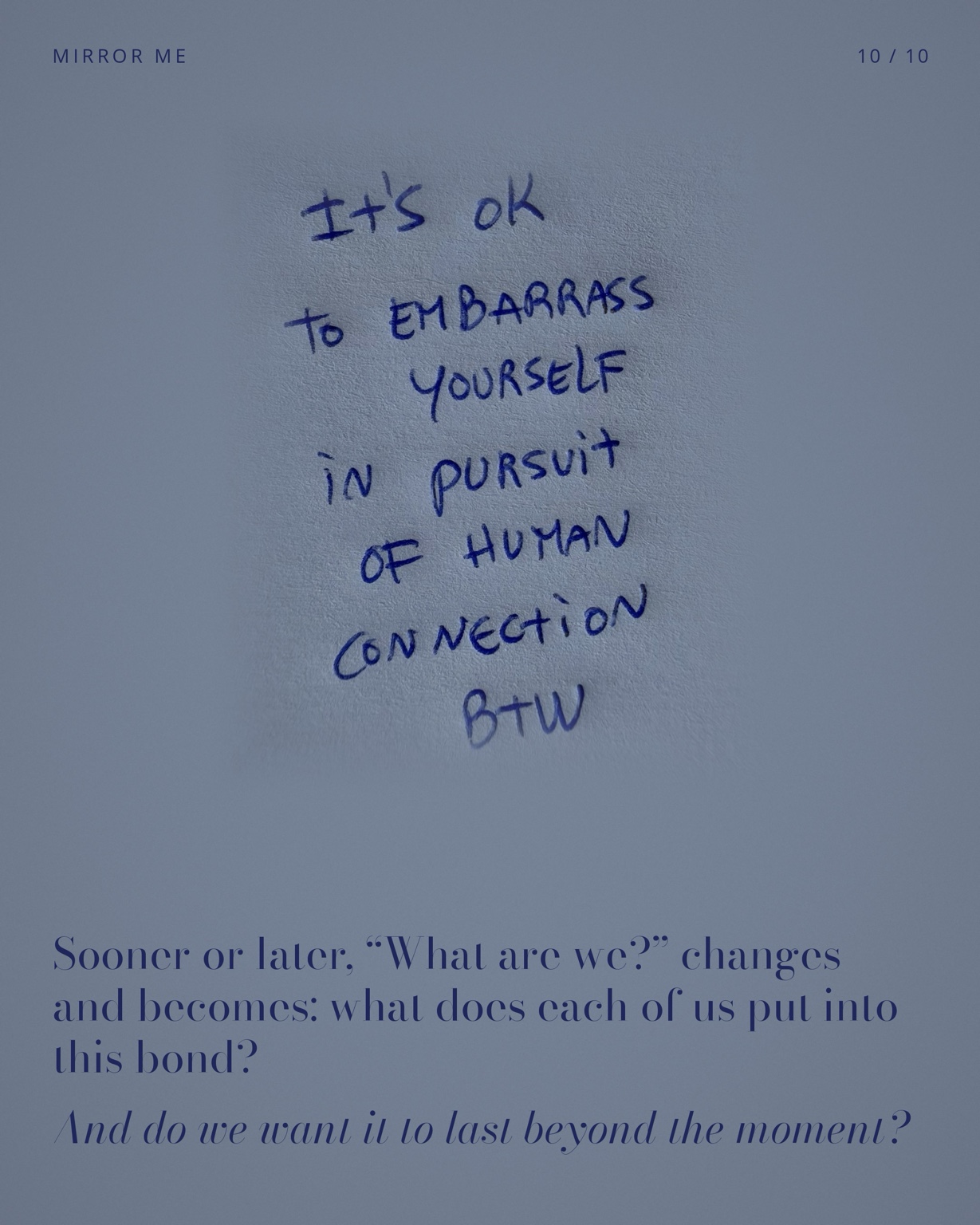
Sooner or later, “What are we?” changes and becomes: what does each of us put into this bond?
And do we want it to last beyond the moment?
Repères
Esther Perel, stable ambiguity.